The Challenge
The hotel welcomes guests from many countries, and they get in touch the way they travel: on WhatsApp late at night, through the website before they book, and by phone when a message goes unanswered. Most of those messages asked the same things. What time is check-in? Is there parking? Can the hotel arrange an airport transfer? When is breakfast served? Is a late check-out possible?
Every chat landed on one shared WhatsApp phone at the front desk, and emails waited in an inbox that was checked between arrivals. At night a small team covered the desk, the phone and the inbox together, so a question about a cot, a dietary need or a booking could wait until the morning shift. Requests for housekeeping, maintenance or the restaurant were passed on by phone or written on a pad, and guests often had to repeat their details to a second person.
Guests wrote in Arabic, English and several other languages, and the same question could receive different answers depending on who replied. Management had no view of which questions arrived most, at what time, or how many were never answered at all, a blind spot we see often in hospitality.
- Slow first replies outside office hours, including for booking inquiries
- One shared phone carrying every conversation, with no record of who answered what
- Requests relayed between departments by phone, with details lost on the way
- No view of what guests asked, in which language or at what time
Our Approach
Discovery started at the front desk and continued with reservations, housekeeping, engineering and the food and beverage team. With the hotel's agreement we reviewed a sample of recent WhatsApp chats and emails with personal details removed, and grouped every question by topic, language and time of day. That gave us the intents that mattered most, and the questions the hotel wanted a person to keep answering.
Process mapping followed each type of message from arrival to resolution: who owns it, which details they need, and what the guest should hear when that person is off shift. The fit-gap review compared this map with what StarBot does as standard. Channels, Arabic and English conversations, guided request flows and handover with routing by topic, language and business hours were all configuration, so no custom development was needed. Bookings stay in the hotel's reservation system: StarBot captures booking requests and passes them to the reservations team, who confirm them as before.
The plan ran in phases. First came the knowledge base, written as approved answers in Arabic and English and checked by the front office manager. A pilot on the website widget followed, with transcripts reviewed together and gaps fixed before WhatsApp went live. Testing covered sample conversations for every intent, every handover rule and both languages, plus deliberate edge cases such as a complaint, an urgent safety issue and a message in a third language. Training gave each desk a short session on the team inbox: taking over a chat, replying with the transcript in view and closing it so StarBot resumes.
The Solution
One Assistant on the Website and WhatsApp
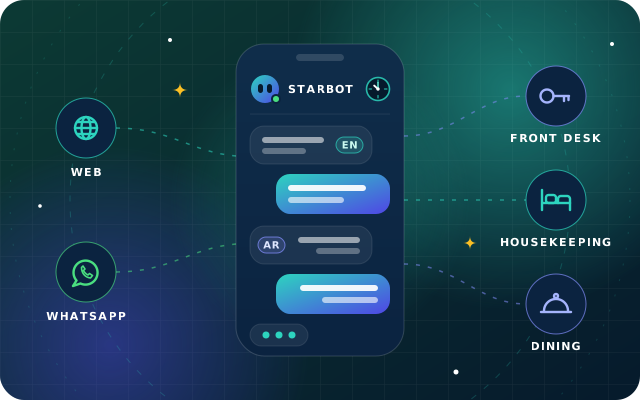
StarBot runs on the hotel website through a single embed snippet and on the hotel's business WhatsApp number. Both channels share one knowledge base and one set of handover rules, so a question asked on WhatsApp at midnight gets the same answer as one asked on the website at noon. Rich replies with buttons, images and documents let guests open directions, view the breakfast menu or choose a request type in one tap.
Arabic and English, with a Clear Path for Every Other Language
StarBot detects whether each message is written in Arabic or English and replies in the same language, from answers the hotel has approved in both. Messages it cannot answer with confidence, including those written in other languages, follow the fallback and handover rules: the guest receives a polite holding reply and the conversation passes to the desk on duty, where a colleague replies in the guest's language whenever someone on shift speaks it.
Requests That Reach the Right Desk
Guided flows collect what each department needs before a person picks the request up: the guest's name, room or booking reference, dates and the request itself. Room and table booking requests go to reservations and the restaurant, special requests such as a cot, an early check-in or a celebration go to the front office, and housekeeping and maintenance requests go straight to those teams. Routing follows topic, language, channel and business hours, so an Arabic conversation that needs a person reaches a colleague who replies in Arabic. Every handover carries the full transcript, and the colleague starts at the solution rather than at the first question. The first intents followed the hospitality use cases StarBot is built for, from room and table booking requests to amenities, check-in information and special requests, and the hotel's own chats shaped the rest.
Out of Hours, Governance and Learning
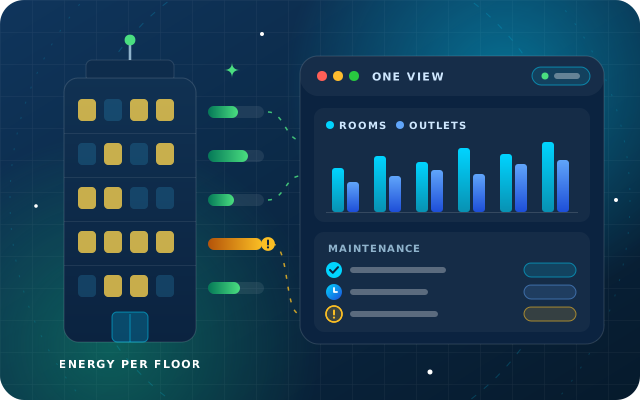
When a desk is closed, StarBot still answers what it can and records the rest with a promised call-back, so nothing waits unseen until morning. Escalation rules hand over at once for complaints, negative sentiment, safety concerns or any guest who asks for a person. Answers come only from the approved knowledge base, retention rules limit how long transcripts and personal details are kept, and the audit log records who changed which answer. The analytics view shows conversation volume by channel, language, hour and topic, and unanswered questions join a review queue that the front office manager works through with our team.