Chatbot Human Handover: When the Bot Should Step Aside
Star Bit Solutions9 min read
A chatbot earns trust by knowing its limits. This guide to chatbot human handover covers the triggers that should bring in a person, the context an agent needs, queues and business hours, what to tell the customer and how to measure the results.
A customer who asks for a person should be handed over at once; other triggers include low confidence, repeated failure, frustration, complaints and payments.
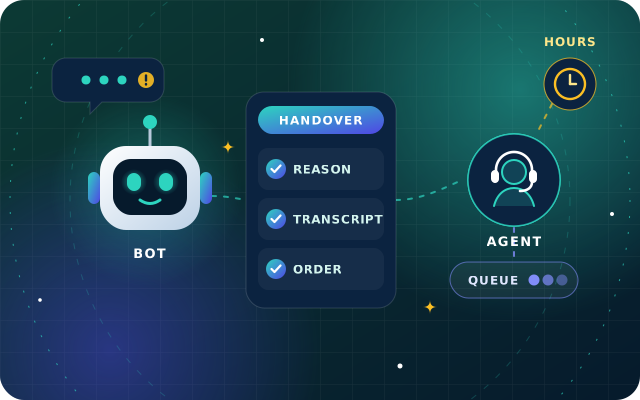
Pass a handover packet with the reason, transcript, captured details, identity and what the bot tried, so nobody has to repeat themselves.
Route by topic, language and channel, plan for business hours and holidays, and respect WhatsApp's 24-hour customer service window.
Tell the customer who is taking over, that they can see the chat and when to expect a reply, and only promise times you can keep.
Measure handovers by trigger, time to first human reply and abandonment, and review handed-over chats with your agents every week.
Every chatbot reaches the edge of what it should handle. A refund dispute, a frustrated customer on their third attempt, a question about a prescription, a long-standing client who simply wants a person. What happens in that moment decides whether the customer remembers your bot as helpful or as a wall.
Chatbot human handover is the move from automation to a member of your team, with the conversation and its context intact. This guide covers when the bot should step aside, what the agent needs to receive, how queues and business hours shape the experience, what to tell the customer, and how to measure whether handovers are working.
What a Good Chatbot Human Handover Looks like
A handover has three parts. The bot recognizes that a person is needed, the conversation moves to the right agent with everything gathered so far, and the customer knows what will happen next. When the agent finishes, the conversation returns to the bot or closes cleanly.
Two shortcuts undermine it. A cold transfer, where the customer is sent to a phone number or a contact form and has to start again, throws away the context the bot collected. A hidden handover, where it is unclear whether a bot or a person is replying, erodes trust the moment the customer notices. Say plainly when a person joins and when the bot is back.
The Triggers That Should Bring in a Person
Good escalation rules combine what the customer says, how the conversation is going and who the customer is. These are the triggers most service teams need:
Trigger
Typical signals
What the bot does
Customer asks for a person
"Agent", "human", "speak to someone", or the same request in Arabic
Hands over at once, without one more article first
Low confidence
The best intent match falls below your threshold
Asks one clarifying question, then offers a person
Repeated failure
Two fallbacks in a row, or the same question rephrased
Stops trying and hands over with the failed attempts attached
Frustration
Negative sentiment, capital letters, repeated messages, words such as "useless"
Apologizes briefly and hands over
Complaint
"Complaint", a request for a manager, a threat to cancel
Routes to the complaints owner, not the general queue
Payments and refunds
Disputed charges, failed payments, refund amounts, bank details
Hands over; the bot may send a secure payment link but does not decide disputes
VIP or high value
A tag in your CRM (customer relationship management system), a contract tier or an order value above a limit you set
Routes to the account manager or a priority queue
Sensitive topics
Health, legal, account security, bereavement, anything your policy names
Mandatory handover with a carefully worded message
Two rules make triggers work in practice. Explicit requests always win: a customer who asks for a person should never have to ask twice. And every trigger should appear in your reporting, so you can see which ones fire most and whether they fire for the right reasons.
Tune Confidence Thresholds on Real Transcripts
A confidence threshold is not set once. Start with your platform's default, review the conversations answered with low confidence, and adjust. Too low, and wrong answers slip through; too high, and the bot hands over conversations it could have handled. A weekly look at the queue of unanswered and low-confidence questions turns repeat patterns into new content.
Pass the Full Context, Not Just the Chat
Nothing undoes a good bot faster than an agent who asks the customer to start again. The fix is a handover packet that arrives with the conversation, so the agent starts at the solution rather than at "How can I help?". It should include:
The reason for handover, so the agent knows at a glance whether this is a complaint, a VIP or a question the bot could not answer.
The full transcript in the original language, including the buttons the customer tapped.
Captured details such as order number, booking reference, product, amount and dates.
Who the customer is: name, contact details, the account or CRM record, and whether their identity has been verified.
What the bot already tried: answers shown, links sent and flows started, so the agent does not repeat them.
Channel and language, plus attachments such as a photo of a damaged item.
Priority flags such as VIP status, negative sentiment or a promised call-back time.
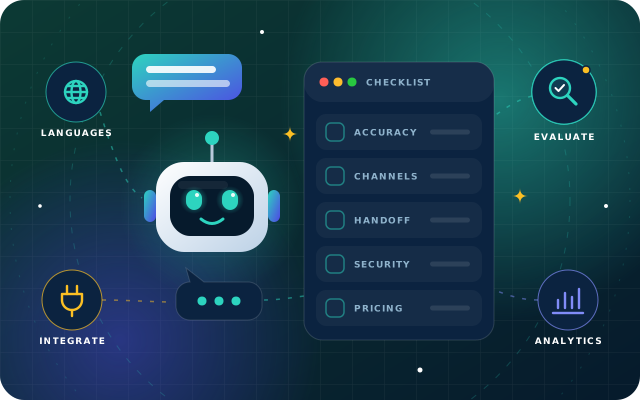
Where the bot connects to your ERP (enterprise resource planning system) or CRM, link the record rather than copying it, so the agent sees the live order or invoice. Our chatbot buying guide lists the questions to ask any vendor about what the agent actually receives.
Have a question about this guide? Ask the engineers who wrote it.
A handover is only as good as the queue behind it. Route each conversation by topic, language and channel to the team that can resolve it, and decide in advance what happens when that team is busy or closed.
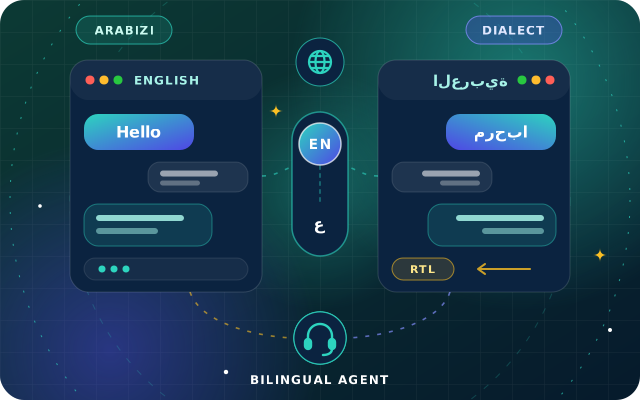
Route by skill. Returns go to the returns team, invoices to accounts, and Arabic conversations to Arabic-speaking agents, as covered in our guide to Arabic and English chatbots.
Know your hours. Set working hours per team, including weekends, Ramadan hours and public holidays. Islamic holidays in the UAE follow moon sighting, so check the dates on the official UAE public holidays page as they are announced.
Plan for out of hours. Capture the details, promise a reply or call-back at a time the team can meet, and create the case so it is first in the queue when the team arrives.
Respect the WhatsApp window. A 24-hour customer service window opens, or resets, each time the customer messages you. Inside it you can reply freely; once it closes, you can only send pre-approved template messages, as Meta's WhatsApp Cloud API documentation explains. Keep an approved follow-up template ready for replies that miss the window.
Set an overflow rule. If a queue waits too long, offer a call-back or route to a second team rather than leaving the customer watching a typing indicator.
Tell the Customer What Happens Next
The handover message matters as much as the routing. It should say who is taking over, that they can see the conversation, when to expect a reply and whether the customer needs to stay on the channel. A realistic expectation that is met beats an optimistic one that is missed. During opening hours, something like this works:
I am passing you to our returns team. They can see this conversation and your order details, so you will not need to repeat anything. The team is online until 6pm and will reply here.
Out of hours, the message changes but the honesty does not:
Our team is offline now and back at 9am. I have saved your request with your order number and photos, and a colleague will message you here in the morning.
Write these messages natively in each language you support. When the agent joins, they should introduce themselves by name, and when the conversation returns to the bot, the bot should say so.
A Worked Example: A Damaged Delivery on WhatsApp
Here is how the pieces fit together for an online retailer that answers on WhatsApp.
The request. In the evening, a customer writes that the blender they ordered arrived with a cracked jug and asks for a refund.
The bot does the groundwork. It matches the customer's number to the order, looks up the delivery, and asks for a photo of the damage and whether they prefer a refund or a replacement.
A trigger fires. Refund requests are a mandatory handover in this business, and the customer's second message is clearly frustrated. The bot hands the conversation to the returns queue.
The packet arrives. The returns agent sees the reason, the order and delivery records, the photo, the customer's preference and the full transcript.
Out of hours, honestly. The returns team has gone home, so the bot tells the customer when they will hear back, and the case waits at the top of the morning queue.
The agent resolves it. The agent replies the next morning, inside the 24-hour window, approves the refund and books a collection. Had the reply come after the window closed, the agent would have needed an approved template message to restart the conversation.
The bot returns. When the agent closes the case, the bot sends a one-question satisfaction survey and stays available for the next question.
How to Measure Chatbot Handovers
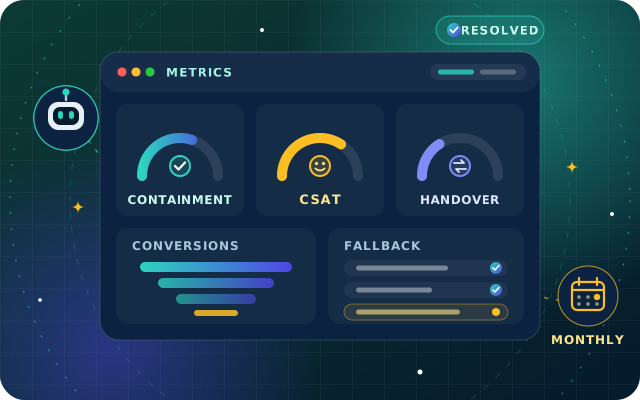
Handovers are not a failure metric. Some conversations should reach a person, and a bot that never hands over is often trapping customers. The goal is the right handovers, quickly, with nothing lost on the way. Track these measures by trigger, channel and language:
Handover rate: the share of conversations that reach a person, split by trigger so you can see why.
Time to first human reply: from handover to the agent's first message, inside and outside business hours.
Abandonment after handover: customers who leave before an agent replies.
Repeat questions: handovers where the agent asked for something the bot had already captured, a sign of gaps in the packet.
Resolution and satisfaction after handover: whether the case was solved, and how the customer rated it.
Unnecessary handovers: cases solved with an answer that already existed, which point to content or training gaps.
Missed handovers: conversations the bot kept but should not have, found through low ratings, complaints and transcript reviews.
Tip: Ask agents to tag every handed-over conversation with one outcome, such as "needed a person" or "bot could have answered". Reviewed weekly with the agents, those tags become a short, specific list of what the bot should learn next.
How Star Bit Solutions Can Help
StarBot, our conversational AI chatbot, is designed around handover. Escalation triggers cover keywords, sentiment, repeated misunderstanding and customer requests, and you decide when handover is mandatory, for example for sensitive topics or high-value requests. Conversations are routed by topic, language, channel and business hours, and the agent receives the full transcript and captured details in your existing helpdesk or a shared team inbox. Out of hours, StarBot captures the request with a promised call-back, and the bot resumes automatically when the agent closes the conversation.
StarBot also connects to StarBiz and to Odoo through OdooStar, so the bot can look up the order, invoice or CRM record before it hands over, and what it finds travels with the conversation. We agree your escalation rules with you, test them against sample conversations and refine them during the pilot. Talk to us, call +971 55 973 4524 or email [email protected].
Written by the Star Bit Solutions team
Star Bit Solutions is a software company in Ajman, UAE, founded in 2014. We implement and customize Odoo Enterprise and Odoo Community, and build StarBiz (AI-driven ERP), StarHub (life super app), StarBot (conversational AI), StarLearn (adaptive learning) and StarSense (AI and IoT platform). About us
Language switching, Gulf dialect, Arabizi, right-to-left layouts, tone and bilingual handover: a practical design guide for Arabic and English chatbots.
Containment, resolution, satisfaction, handover, first response, fallback and conversions defined, with vanity metrics to drop and a monthly review routine.
Hand over whenever the customer asks for a person, and when the bot's confidence is low, it has failed twice in a row or the customer is clearly frustrated. Complaints, refund disputes, payment problems, sensitive topics such as health or legal questions, and VIP or high-value customers should also reach a person. Make explicit requests immediate, so nobody has to ask twice.
What information should a chatbot pass to the agent at handover?
The reason for the handover, the full transcript in the original language, details already captured such as order number and dates, the customer's identity and whether it was verified, what the bot already tried, the channel and language, any attachments and priority flags such as VIP status. Link live ERP or CRM records rather than copying them into the chat.
What should a chatbot do when no agent is available?
Say so honestly, capture the details and promise a reply or call-back at a time your team can actually meet. Create the case so it is first in the queue when the team returns. On WhatsApp, free-form replies are only possible within 24 hours of the customer's last message, so keep an approved template ready for later follow-ups.
Is a high chatbot handover rate a bad sign?
Not necessarily. Some conversations should reach a person, and a bot that never hands over is often trapping customers. Look at why handovers happen: frequent handovers for questions the bot should answer point to content gaps, while handovers for complaints, disputes and sensitive topics show the bot doing its job. Track the rate by trigger rather than as one number.
How do you measure whether chatbot handovers work?
Track the handover rate by trigger, the time from handover to the first human reply, how many customers leave before an agent answers, how often agents ask for details the bot already captured, and resolution and satisfaction after handover. Review a sample of handed-over conversations every week with your agents to find unnecessary and missed handovers.
StarBot by Star Bit Solutions
Automate the Routine, Hand over the Rest.
Tell us how your team handles complaints, refunds and VIP customers. We will design StarBot's escalation rules around them and test them with you before launch.