The Challenge
The client runs a busy independent service center for passenger cars and light commercial vehicles, handling routine servicing, brakes, suspension, air conditioning and electrical work for walk-in customers and small fleet accounts. Service advisors quoted jobs from memory and a printed price sheet, and the final invoice often differed from what the customer had agreed at the counter. Labor time was not recorded, so nobody knew how long a job really took or what it cost.
The parts store held a very large catalog built up over many years, with the same part entered under different names, superseded part numbers still in use and no barcodes on the shelves. Parts were taken for a job and written on a paper card, and some never reached the invoice. Batteries and exchange units such as alternators and starter motors carry serial numbers, but nobody recorded them, so every warranty claim began with a search through paper.
The owner could see monthly sales and the bank balance, but not whether a brake job, a major service or a fleet account made money. Customer history lived on old job cards and a spreadsheet, so a returning customer was treated as new, and work recommended at the last visit was rarely followed up. It is a familiar picture in Automotive: a large parts catalog, jobs quoted from memory and no history to build on.
- Quotes given from memory that did not match the final invoice
- Parts fitted but never billed, and stock that did not match the shelves
- No serial records for batteries and exchange units
- No labor time or cost per job, so no job costing
- No service history or follow-up for repeat customers
Our Approach
Discovery took place on the workshop floor. We followed vehicles from reception to delivery, sat with service advisors at the counter and spent time in the parts store, then mapped every step: check-in, inspection, quotation, customer approval, parts issue, work, road test, invoice, payment and handover of the keys.
The fit-gap review against StarBiz showed that the core needs were standard: quotations with price lists and approval rules, stock reserved against confirmed orders, lot and serial tracking, timesheets, costing and CRM. The configuration work went into the workshop job card, which brings the customer, the vehicle and the work together, and into vehicle details such as registration, chassis number, make and model, held against each customer so that one customer can have several vehicles.
The phased plan put the parts store first, because a job card is only as good as the parts it can find. The first phase cleaned and loaded the catalog and counted the stock, the second introduced job cards, quotations and invoicing, and the third added CRM follow-ups and the job costing dashboards.
The catalog clean-up merged duplicates, kept the manufacturer part number on each item alongside one internal reference, set reorder levels for fast-moving items and labeled every bin with a barcode before the opening count. Advisors and technicians tested job cards on real vehicles while paper cards were still in use, and training was given by role: advisors on quoting and approvals, technicians on logging time from the workshop tablet, the storekeeper on issuing and receiving, and the accountant on costing and reports.
The Solution
Job Cards with Parts and Labor
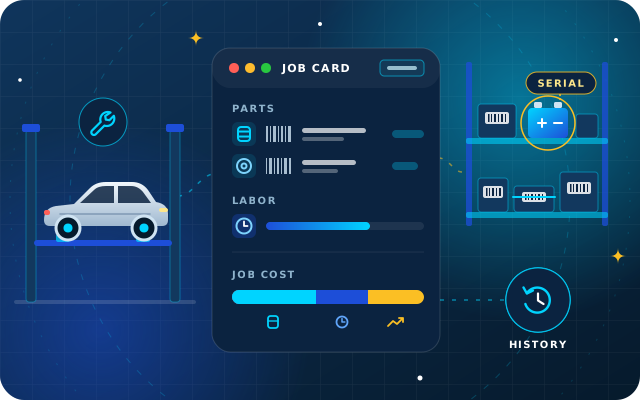
Every vehicle that arrives gets a job card linked to the customer and the vehicle. The service advisor builds the quotation from service packages with standard labor and parts from the catalog, priced from the right price list for walk-in or fleet customers. Discounts above the advisor's limit go to the workshop manager for approval, the customer can review the quotation in the customer portal, and the approval is recorded on the job card before work starts. When a technician finds extra work during inspection, it is added as a new quotation line and approved before the work continues.
A Parts Catalog the Store Can Trust
Parts are reserved from stock when the quotation is confirmed and issued against the job card, so nothing leaves the store without a job. Batteries and exchange units are tracked by serial number, and the traceability report links each serial to the supplier receipt, the job and the vehicle. Engine oil is bought in drums and issued by the liter, with the unit conversion handled automatically. Reorder rules cover fast movers such as filters, brake pads and wiper blades, AI reorder suggestions take account of consumption and supplier lead times, and purchase requests go through supplier comparison and approval.
Job Costing on Every Job
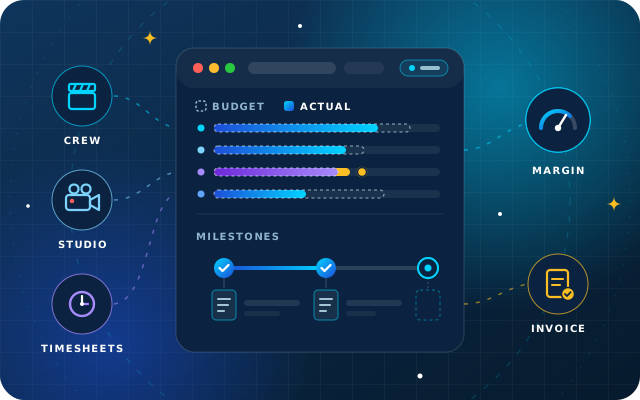
Technicians log their time on each job from a shared tablet in the workshop, and the job card collects parts at their stock valuation cost and labor at the technician's cost rate. When the job is invoiced, its margin is known straight away. Dashboards compare margin by service package, job type and fleet account, and the StarBiz AI layer flags unusual discounts and margin drops for review.
CRM for Repeat Customers
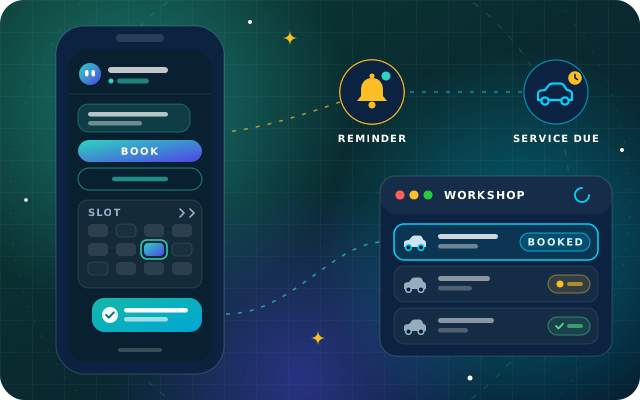
At check-in, the advisor sees the vehicle's full service history. Work the customer chose to postpone is recorded as an opportunity with a follow-up activity, so a recommendation such as replacing worn brake discs becomes a call at the right time instead of a forgotten note. Fleet accounts have their own price lists, fleet managers see quotations, orders and invoices in the customer portal, and aged balance reports show which accounts are overdue. Where bookings and service reminders on WhatsApp are needed, StarBot connects to the same records, as our car service booking chatbot case study shows.