
Healthcare
Odoo Enterprise for Pharmacies: Medicine Batch and Expiry Control across Every Branch
Lot and expiry tracking, FEFO stock rotation and one daily takings report for a multi-branch pharmacy group on Odoo Enterprise.
OdooStar
A growing medical center put StarBot on its website and WhatsApp to answer the appointment questions that kept reception on the phone, and moved purchase approvals out of email into StarBiz, with a cost center for every department.
A multi-department outpatient medical center in the UAE
Client confidentiality: we are not allowed to disclose the name or address of this client. The project details below are shared with that in mind.
Apps and modules in this project
The medical center had added departments and doctors faster than it had added front desk staff. Reception handled walk-ins, phone calls and a shared WhatsApp number at the same time, and most of what they answered was the same short list of questions: which doctors work on which days, how to book or change an appointment, what to bring, which insurance networks are accepted and where to park. Messages that arrived after closing waited until the next morning, and callers who could not get through often booked elsewhere.
Purchasing ran on email. A department head wrote to the operations manager, who forwarded the request to finance, and the thread was the only record of who had approved what. Urgent consumables were sometimes bought first and approved afterwards. Costs were booked to the center as a whole, so no department could see its spend against a budget until finance prepared a manual analysis, a pattern we see often in healthcare organizations.
We ran two workstreams under one plan. For StarBot, we sat with reception, reviewed the questions they handled most and turned the answers into a knowledge base in Arabic and English: opening hours, doctor schedules, booking and cancellation rules, what to bring, accepted insurance networks and directions. The center's management approved every answer before it went live.
We agreed the boundaries before writing a single answer. StarBot handles administrative questions only. Anything that sounds clinical, such as symptoms, results or medication, is handed straight to staff, and content guardrails stop the assistant from offering medical advice.
For procurement, we mapped how requests really moved in each department and turned the email chain into rules: who may request, which value limits need which approver and when finance signs off. Each department became a cost center with its own budget. We prototyped the flow in StarBiz on sample requests, tested it with department heads and loaded the supplier list and open orders before go-live.
StarBot started as a pilot on the website widget, so we could review real transcripts with reception and close gaps before switching on WhatsApp. Training was short and role-based: reception learned the handover inbox, department staff learned to raise and track requests, and approvers learned to approve from their phones.
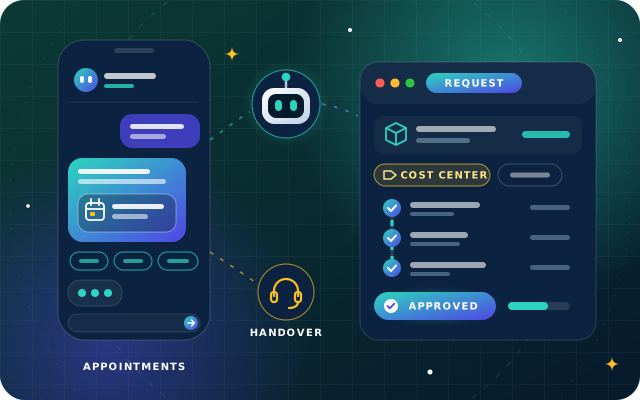
The StarBot widget sits on the center's website, and the same assistant answers on its business WhatsApp number. It detects Arabic or English and replies in the same language, answers from the approved knowledge base and uses buttons and quick replies to guide people through common requests. When someone wants to book, change or cancel an appointment, StarBot captures the request and hands it to reception with the full conversation, and reception confirms the slot in the center's existing booking system. Inquiries after hours receive an answer straight away or a promised call-back.
Escalation rules pass a conversation to the front desk team inbox when a person asks for staff, when the topic is clinical or when StarBot cannot find an approved answer. Handover is routed by language, so an Arabic conversation reaches a receptionist who replies in Arabic. Reception sees the transcript and what the assistant already tried, so nobody has to repeat themselves. Unanswered questions go to a review queue, and approved improvements are published as a new knowledge base version with an audit trail.
Staff in each department raise purchase requests in StarBiz instead of writing emails. Each request carries its department's cost center, and approval rules route it by value: the department head approves routine consumables, while larger requests also go to the operations manager and finance. Each approved request becomes a request for quotation, supplier quotes are compared side by side, and vendor bills are matched to the purchase order and the receipt before payment. Every step is recorded in the audit log.
Each department has a budget in StarBiz finance. Department heads see budget against actual for their own area, management sees the whole center on one dashboard, and StarBiz flags possible duplicate vendor bills for review before they reach the month-end report. Managers can also ask StarBot plain questions about live StarBiz data on WhatsApp, such as where a request stands or how spend compares with budget, and the answer is limited to what their role is allowed to see.
An Arabic and English assistant for web, WhatsApp and social, with human handover built in.
Learn MorePurchase requests, approvals, budgets and cost centers on one platform with a full audit trail.
Learn MoreAppointment assistants, procurement approvals and department cost reporting for clinics and pharmacies.
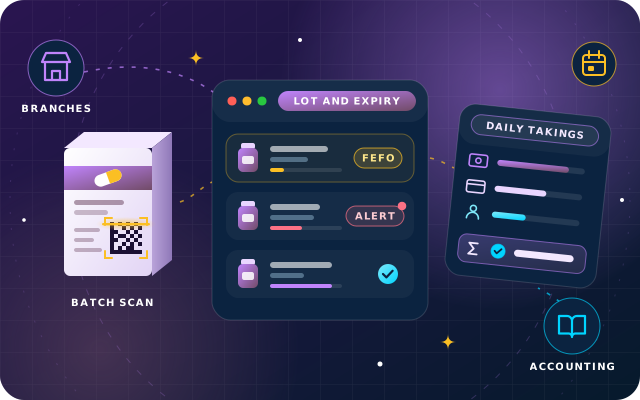
Learn MoreLot and expiry tracking, FEFO stock rotation and one daily takings report for a multi-branch pharmacy group on Odoo Enterprise.
OdooStar
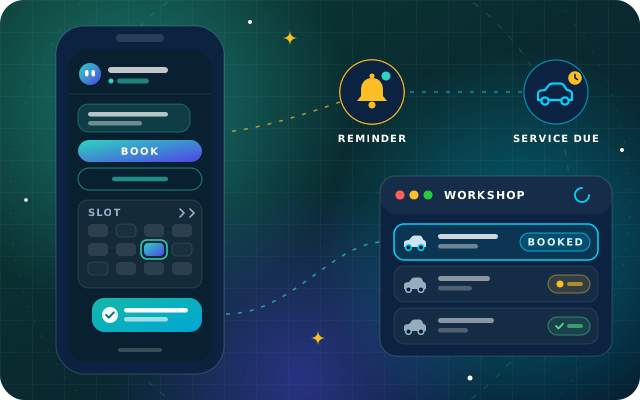
Bookings on WhatsApp and the web, service reminders sent with customer opt-in, and every booking arriving in StarBiz as a workshop job.
StarBot and StarBiz

StarBot answers show, ticket and venue questions on web, WhatsApp and social, while StarHub keeps the events team's schedules and tasks in step.
StarBot and StarHub
It should not, and StarBot is configured not to. Answers come only from a knowledge base the clinic approves, content guardrails block topics such as symptoms, results and medication, and escalation rules hand those conversations to staff with the full transcript. The assistant handles administrative questions such as opening hours, doctor schedules, booking requests and directions, which are the questions that keep front desk phone lines busy.
Yes. StarBot detects whether a message is written in Arabic or English and replies in the same language, on the website widget, WhatsApp and social inboxes. One knowledge base serves every channel, so a question asked on WhatsApp gets the same answer as one asked on the website, and handover messages are maintained in both languages.
When every purchase request carries a department's cost center, approvals can follow that department's budget and value limits, and spend is reported where it happens. In StarBiz, department heads see budget against actual for their own area, management sees the whole center, and every approval is recorded in the audit log, so month-end analysis no longer has to be rebuilt from email threads and spreadsheets.
Send us your front desk's most common questions and a description of how purchase approvals work today, and we will show you StarBot and StarBiz set up around them.