Health and Medication Tracker Apps: Privacy Questions to Ask First
Star Bit Solutions8 min read
A medication tracker app knows what you take, when and often why. Before you hand it your health, check how it handles consent, encryption and storage, how it shares with family or carers, and whether export and deletion really work.
A medication list can reveal your conditions, so judge a tracker app's privacy promises with the same care as your medical records.
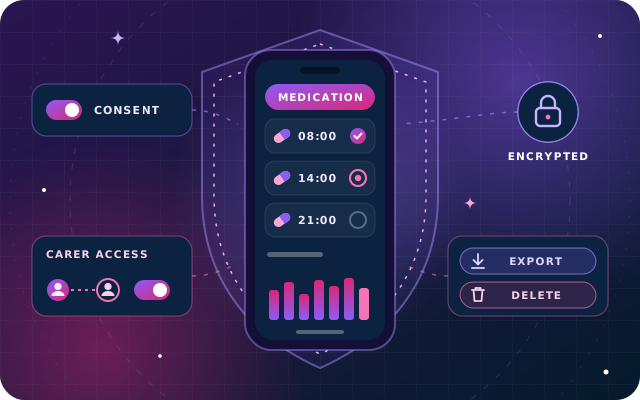
Look for clear consent, encryption in transit and at rest, a named storage location and no sharing with advertisers.
Sharing with family or carers should be per item and per person, with roles you control and access you can revoke in one step.
Test export and deletion during a trial, and check what dose reminders reveal on your lock screen.
A medication tracker app is one of the most useful things you can put on a phone. It reminds you of each dose, warns you before a refill runs out and keeps a history you can show a doctor. It also builds one of the most revealing records about you that exists: what you take, how often and since when, and by implication what you are being treated for.
That is not a reason to avoid these apps. It is a reason to read the small print before you start, and to test a few things yourself. Everything below is general information about privacy, not medical or legal advice, so always follow your doctor's or pharmacist's instructions about your medicines.
Why Health Data Deserves Extra Care
Some personal data can be changed after a leak: you can reset a password or cancel a card. You cannot change the fact that you take a particular medicine, and a medication list is often enough to infer a diagnosis. Health information can affect how employers, insurers or even relatives treat someone, which is why data protection laws in many countries, including the UAE, give it special status.
Tracking apps also collect more than the list itself. Reminder times reveal daily routines. Logged symptoms, moods, vitals and appointments add detail, and even which pharmacy you use or when you open the app can say something about your health. The risk is real: in 2023 the US Federal Trade Commission took action against GoodRx, a telehealth and prescription drug discount provider, for sharing users' prescription medications and health conditions with advertising platforms, contrary to its own privacy promises.
Questions to Ask before You Choose a Medication Tracker App
Most answers should be in the app's privacy policy and settings. If they are not, ask the provider directly. A trustworthy provider will reply in plain language.
Consent and Purpose
What does the app collect, and is each item needed for a feature you actually use?
Is consent asked for separately for sensitive uses, such as sharing with a carer or using your data for AI insights, rather than bundled into one tick box?
Can you withdraw consent later, and what happens to data already shared?
Is your data used only to provide the service to you, or also for research, marketing or product analytics?
Encryption and Account Security
Is data encrypted in transit, between your device and the server, and at rest, where it is stored?
Can you add an app lock, such as a passcode or fingerprint, on top of the phone's own lock?
Can you see which devices are signed in to your account, and sign one out remotely if a phone is lost?
Do reminders show medicine names on the lock screen, and can you hide them?
Where the Data Is Stored
In which country, and with which hosting provider, is your data stored, and is it ever moved elsewhere?
Which other companies process your data on the provider's behalf, such as hosting, messaging or analytics services?
What happens to your data if the provider is sold or closes the service?
Advertising and Third Parties
Does the app contain advertising or tracking tools from other companies?
Is any data, even data described as anonymous, sold or shared with advertisers, data brokers, insurers or employers?
If an employer or insurer provides the app, what exactly can they see?
Sharing with Family Members and Carers
Shared care is one of the best reasons to use a tracker. An adult child can check that an elderly parent took the morning dose, a parent can manage a child's inhaler schedule, and a carer can see what is due today. It is also where privacy goes wrong most easily, because many apps offer all or nothing.
Good sharing controls have four qualities:
Per item and per person. You choose exactly what each person sees: the medication schedule, perhaps, but not your notes, moods or other records.
Clear roles. Viewing a schedule or confirming a dose is a different permission from editing medicines or deleting history.
Consent from the person concerned. An adult whose medicines are tracked by a relative should agree to it and be able to see what is shared.
Easy to revoke. When a carer changes or a family situation shifts, you can remove access in one step, and the app confirms it.
If you manage medicines for a child, or for a parent who can no longer manage their own, set up a separate profile for them rather than mixing their records into yours. It keeps each history accurate and makes it easier to hand over care, or share the record with a doctor, later.
Have a question about this guide? Ask the engineers who wrote it.
Two rights matter most when you leave an app: taking your data with you, and making sure what you leave behind is really gone.
A good app lets you export your medication history, adherence records and health records in a standard format, such as a PDF for your doctor or a spreadsheet for your own files. Deletion should work at three levels: a single record, a module's history and your whole account. It should remove data from every synced device and from the provider's live systems, and the provider should say how long backups are kept before they are erased.
Tip: During a trial, add a test medicine with a made-up name. Check what its reminder shows on your lock screen, export your data and look for the test entry, then delete it and confirm it has gone from your other devices. A few minutes of testing tells you more than a long privacy policy.
Good Answers and Red Flags
Question
A good answer
A red flag
Who uses my data?
Only the provider, to deliver the service to you
Partners, for marketing or research, by default
Is it encrypted?
Yes, in transit and at rest
"Secure servers", with no detail
Where is it stored?
A named country and hosting provider
No answer, or simply "the cloud"
Is there advertising?
No third-party advertising or tracking tools
Ads inside a health app
How does carer sharing work?
Per item and per person, and easy to revoke
One switch that shares everything
Can I export my records?
Standard formats, at any time
Only by emailing support
What does deletion do?
Removes data from every device and the live service
The account is deactivated but the data is kept
What UAE Law Says about Health Data
In the UAE, the Personal Data Protection Law, Federal Decree-Law No. 45 of 2021, has been in force since 2 January 2022. As the UAE government portal summarizes, it prohibits processing personal data without the owner's consent except in limited cases, gives people the right to have inaccurate data corrected and to restrict or stop processing, and sets requirements for transferring data across borders. The law treats data about a person's health as sensitive personal data. It does not, however, apply to health data that is already regulated by its own legislation, or to free zones that have their own data protection laws.
The main health-specific law is Federal Law No. 2 of 2019 on the use of information and communication technology (ICT) in health fields, which applies across the UAE, including its free zones. It generally prohibits storing, processing or transferring health data about health services provided in the UAE outside the country, except in cases allowed by the health authorities. Which rules cover a particular app depends on who provides it and how, so if your app is provided by, or linked to, a clinic, pharmacy or insurer, ask how it meets them. Laws and guidance change, so check the latest official position. This section is general information, not legal advice.
How Star Bit Solutions Can Help
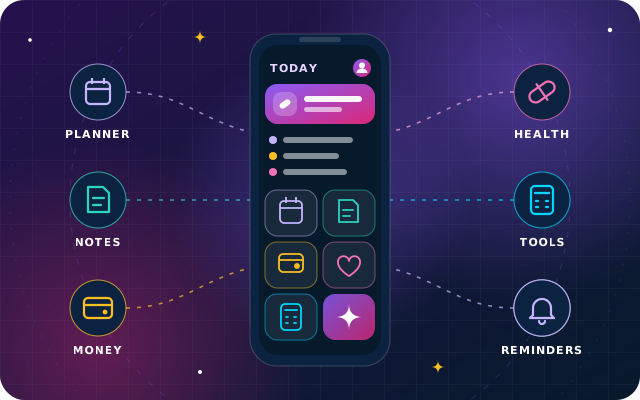
StarHub, the life super app we design and build in the UAE, includes medication schedules with dose reminders and refill alerts, an adherence history you can show a doctor, and health records for conditions, allergies, vaccinations and appointments, alongside activity, sleep, water and mood logging and vitals such as weight, blood pressure and glucose. Profiles for dependants and elderly relatives are set up with consent, and a dose ticked on one device shows as ticked on the others.
It is built on the commitments this article asks for, set out in the StarHub privacy section. Records sit in an encrypted personal vault, encrypted in transit and at rest, and are used only to provide the service to you, never sold or shared with third parties for their own purposes. Sharing is per item and per person, you can see signed-in devices and sign any of them out remotely, and notes, records, expenses and health data export in standard formats. Deleting a record, a module's history or your account removes it from the vault and every synced device. The AI assistant reads only your own data, shows what each suggestion is based on and can be switched off per module. When an organization deploys StarHub, its dashboards show participation and aggregate trends, never an individual's records.
Read why one connected app can beat many in why super apps are winning, and how we handle personal data in our privacy policy. For questions about hosting, data residency or a deployment for your organization, contact us or call +971 55 973 4524, and an engineer will answer.
Written by the Star Bit Solutions team
Star Bit Solutions is a software company in Ajman, UAE, founded in 2014. We implement and customize Odoo Enterprise and Odoo Community, and build StarBiz (AI-driven ERP), StarHub (life super app), StarBot (conversational AI), StarLearn (adaptive learning) and StarSense (AI and IoT platform). About us
App fatigue, context switching, what a personal super app should combine, the privacy questions to ask and how individuals, families and teams use one.
Containment, resolution, satisfaction, handover, first response, fallback and conversions defined, with vanity metrics to drop and a monthly review routine.
Many are, but safety depends on how the provider handles your data. Look for encryption in transit and at rest, data used only to provide the service to you, no third-party advertising, a named storage location, per-person sharing controls, and export and deletion that work. Test these during a trial, and follow your doctor's or pharmacist's advice on the medicines themselves.
Can a health app share my data with advertisers?
Some have. In 2023 the US Federal Trade Commission acted against a prescription drug discount provider for sharing users' medications and health conditions with advertising platforms, contrary to its privacy promises. Read the privacy policy for any mention of advertising partners or tracking tools, check whether the app shows ads, and prefer a provider that says plainly your health data is never used for advertising.
How should I share my medication schedule with a carer?
Use an app that lets you share specific items with specific people, such as the medication schedule but not your notes or other records. Give the carer only the permissions they need, for example viewing and confirming doses rather than editing medicines, and make sure you can revoke access in one step if the arrangement changes.
What does UAE law say about health data in apps?
The UAE Personal Data Protection Law, Federal Decree-Law No. 45 of 2021, in force since 2 January 2022, generally requires consent to process personal data and treats health data as sensitive. It excludes health data covered by its own legislation, such as Federal Law No. 2 of 2019 on ICT in health fields, which governs health data linked to healthcare services and limits storing it outside the UAE. Check the latest official guidance, as this is not legal advice.
What should happen to my data when I delete a health app?
Uninstalling an app usually does not delete your account. Use the app's account deletion option, which should remove your records from the provider's live systems and every synced device, and ask how long backups are kept before they are erased. Export anything you want to keep first, such as your medication and adherence history for your doctor.
StarHub by Star Bit Solutions
Keep Your Health Records Private and in One Place.
Book a free StarHub walkthrough. We will show you medication schedules, carer sharing, export and deletion, and answer every question about your data.