The Challenge
The client is an insurance brokerage that arranges cover for businesses and individuals, from group medical and property insurance to motor and liability policies. Before any cover can be placed, the brokerage has to complete its know-your-customer (KYC) checks and collect the documents that insurers and its own compliance rules require: identity documents for individuals, company records and ownership details for businesses, and the specific information each type of cover needs.
Onboarding ran on email and personal phones. A broker sent a list of documents, the client replied with part of it, often on a different channel, and the gaps were noticed one at a time. Files sat in personal inboxes and chat threads, so nobody could say which clients were still waiting on what, and compliance spent its time chasing paperwork rather than reviewing it. The same questions arrived every day: which documents are needed, whether a scan is acceptable, whether a file has arrived and what happens next.
These are the challenges we see most often in Financial Services:
- Piecemeal requests: clients learned about missing documents one email at a time.
- No single view: outstanding items lived in individual inboxes.
- Documents on personal phones: sensitive files shared in chat threads, outside any access rules.
- Repetitive questions: brokers answered the same onboarding questions instead of advising clients.
- Weak evidence: it was hard to show who had checked and accepted each client.
Our Approach
Discovery began with workshops for the managing director, brokers, the onboarding team and the compliance officer. We mapped onboarding from first inquiry to the point where a client can be placed with an insurer, and listed every document the brokerage asks for by client type and by type of cover. That checklist became the backbone of the project: agreed with compliance, written in plain language and used by both the system and the chatbot.
The fit-gap review showed that standard Odoo Enterprise apps covered the document side: Documents for client folders, tags, requests and reminders, Sign for client agreements, CRM for the onboarding pipeline and Approvals for client acceptance. StarBot could take the routine conversations on the website and WhatsApp, look up application status in Odoo CRM and hand everything else to a broker. We agreed a phased plan:
- Documents and requests: client folders, access rights, document tags and Sign templates, tested with sample clients of each type.
- Pipeline and acceptance: the onboarding stages in CRM and the client acceptance approval for compliance.
- Self-service: a StarBot knowledge base in Arabic and English, piloted on the website and then extended to WhatsApp.
Files for clients already in progress were sorted into their folders and tagged, so the team started with a complete picture of what was outstanding. Brokers, the onboarding team and compliance each had role-based training, and during the StarBot pilot we reviewed transcripts together and filled the gaps before switching on WhatsApp.
The Solution
A Folder and a Checklist for Every Client
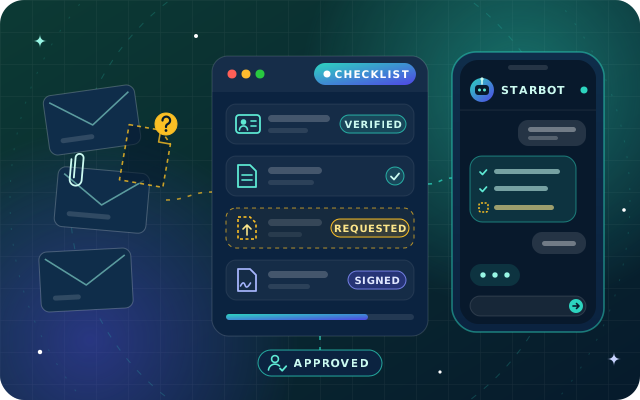
Each client has a folder in Odoo Documents that only the onboarding team, the brokers and compliance can open, with an upload folder inside it shared with the client contact. When an inquiry becomes a new client file, the onboarding team requests every document on the checklist for that client type and cover. Each request names the document, the person it is requested from, a due date and the tags the file should carry, and its placeholder waits in the upload folder until the client uploads the file, so the team can see at a glance what is still missing.
Reminders, Checks, Signatures and Acceptance
Overdue requests are chased with reminder emails from the activity view, one at a time or in bulk, instead of from personal inboxes. When a file arrives, the onboarding team checks it and a folder action tags it as verified. The client agreement goes out for signature through Odoo Sign, and the signed copy is saved to Documents with its tags. For clients that need a compliance decision, an acceptance request in Odoo Approvals goes to the compliance officer with the documents attached, so every acceptance has a named approver.
An Onboarding Pipeline Everyone Can Read
Every onboarding is an opportunity in Odoo CRM, moving through stages from inquiry and documents requested to documents complete, compliance review and ready to place. Brokers see where each client stands without asking, and managers review stalled files in one list rather than across inboxes.
StarBot Answers the Questions Clients Ask Most
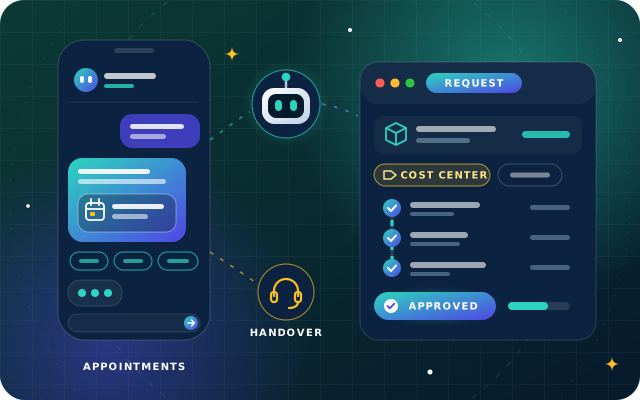
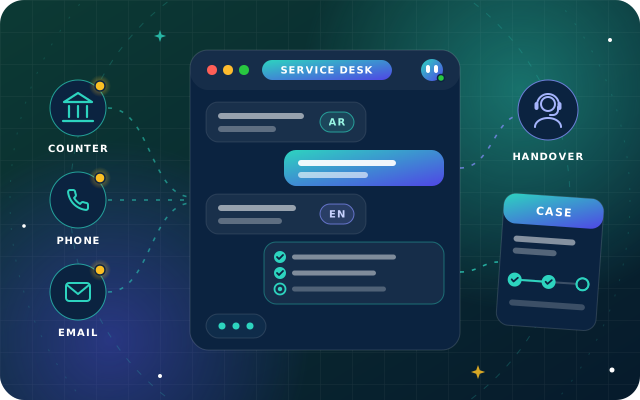
StarBot runs on the brokerage's website and WhatsApp number in Arabic and English, answering from a knowledge base the compliance officer approved: which documents each client type needs, what counts as proof of address, how uploads work and what happens next. A guided flow captures new inquiries and sends the contact details to Odoo CRM, and clients who ask where their application stands get the current stage from CRM, with every lookup scoped to the identity of the person asking.
Content guardrails keep StarBot to information rather than advice. Questions about which cover to choose, premiums or claims, negative sentiment or a request for a person hand the chat to a broker with the full transcript, and out-of-hours requests are captured with a promised call-back. StarBot never asks for documents in the chat: clients upload them to their own folder against the requests, and transcript retention follows rules set for each channel.