The Challenge
The client supplies chilled and frozen food to restaurants, hotels, caterers and grocery stores from its own cold stores, using a fleet of refrigerated trucks. Orders arrived through the sales team, were planned into routes by dispatch and were delivered by drivers who phoned the office whenever something changed on the road.
Most calls to dispatch asked the same thing: where is my order? Kitchens planning their service around a delivery wanted an arrival time, so dispatchers phoned the driver and then called the customer back. At busy times the lines were never free, and real problems such as a refused delivery or a short shipment waited behind routine questions.
The cold chain had a similar blind spot. Each truck's refrigeration unit showed its temperature in the cab, but nobody could see it from the office. Excursions came to light when a receiving chef checked a product on arrival and rejected it, and the temperature records that hotels, supermarkets and inspectors asked for were slow to assemble by hand. It is a familiar logistics picture:
- Dispatch phones busy with routine order-status calls
- No live view of truck temperatures, door openings or locations from the office
- Excursions discovered at the customer's door, after the product was lost
- Temperature evidence for customers and inspectors assembled by hand
Our Approach
We spent time with dispatch, drivers, the cold store team and customer service, and reviewed a sample of the calls and messages they handled. The routine questions fell into a short list of intents: order status, what was loaded and how to report a problem with a delivery. Those became the first scope for StarBot.
The fit-gap showed that StarBot's standard WhatsApp channel, intents and human handover covered the conversation side, and that the only integration needed was a lookup into the distributor's existing ERP, which already held orders and delivery records. We connected the two through StarBot's REST API and webhooks rather than copying data into another system, and each lookup is scoped to the customer who is asking, so a restaurant sees its own orders and nothing else.
For the cold chain we surveyed the fleet and the cold stores for StarSense: where sensors could sit in each cargo area, how door sensors would mount, where gateways could be powered and which readings the refrigeration units already exposed. With the quality manager we agreed temperature bands per product type, who should hear about an excursion first and who comes next if nobody responds.
Both parts went live in phases. StarBot started with a group of regular customers once every message template and flow had been tested with the client, and we reviewed the transcripts together and filled the gaps before every customer received the WhatsApp number. StarSense started on a few trucks running mixed chilled and frozen routes, then extended to the whole fleet and the cold stores. Dispatchers, drivers and the quality team were each trained on their own part: handover, alert acknowledgment and excursion follow-up.
The Solution
Order Status on WhatsApp
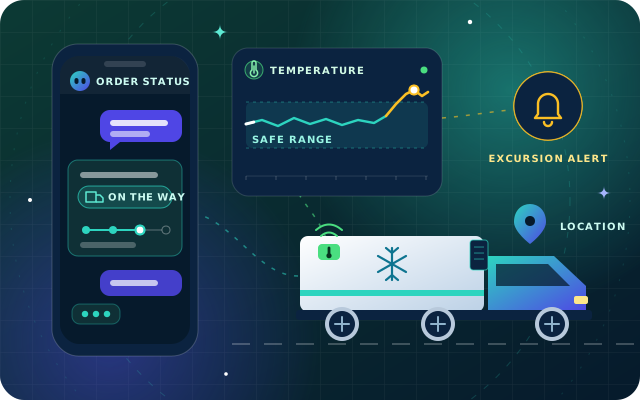
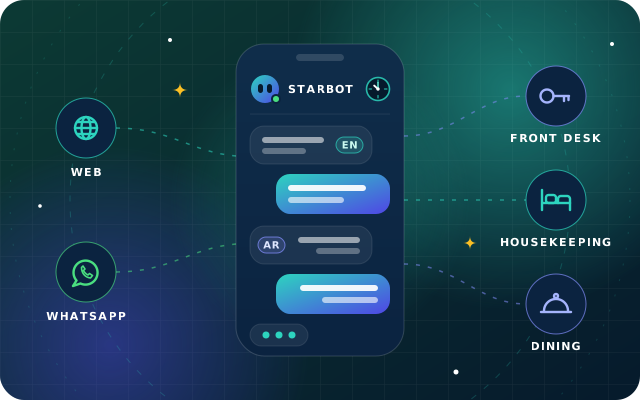
Customers message the distributor's WhatsApp number in Arabic or English, and StarBot answers from live delivery records: whether an order is confirmed, loaded, out for delivery or delivered. It picks out order numbers and dates from the message, asks for any missing detail and keeps the context when the customer follows up. Customers who opt in also receive an approved WhatsApp template message when their order leaves the depot, so kitchens know their delivery is on its way.
Handover for Real Problems
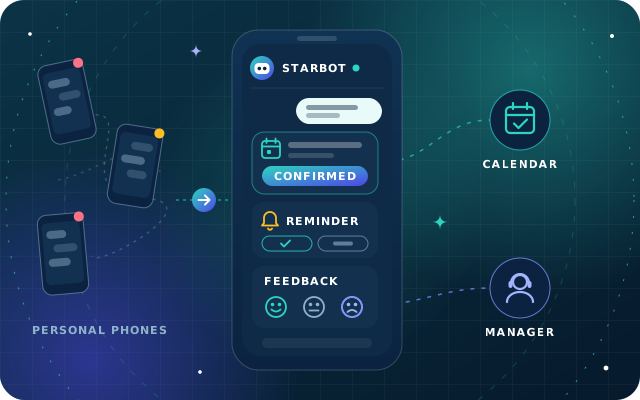
Refused deliveries, short shipments and complaints are handed to customer service with the full transcript, the order number and what StarBot already checked, routed by topic and business hours. Outside hours, StarBot records the issue and promises a call-back. Conversation analytics show the most frequent questions and the ones StarBot could not answer, and the team reviews them to extend the knowledge base.
Temperature, Door and Location Telemetry
Temperature sensors in each cargo area and door sensors on the rear and side doors report through a gateway in every truck, with the vehicle's location attached, and the cold stores are monitored the same way. Gateways hold readings through stretches of weak coverage and upload them when the link returns. Dispatch and the quality team see every truck and cold room on one dashboard, with drill-down to the raw readings.
Excursion Alerts and Compliance Reports
Rules combine thresholds, rate of change and door status, so a door held open at a delivery stop is treated differently from a failing refrigeration unit, and missing-data rules flag a sensor that has gone silent. When a load drifts out of its band, the driver's supervisor receives a WhatsApp alert through StarBot with the truck, the location and the readings, and the alert escalates to the quality manager if it is not acknowledged. Supervisors can also ask StarBot for a truck's current temperature on WhatsApp. For customers and inspectors, StarSense produces shipment temperature reports that the quality team exports as PDF.