The Challenge
The client runs restaurant and cafe outlets in the UAE, with more openings planned. Each outlet had its own point-of-sale system, and the end of every trading day followed the same routine: the manager printed the POS summary, counted the cash, photographed both and sent them to head office in a chat group. Finance re-keyed the figures into the accounting system and tried to match card settlements on the bank statement much later, often without the context to explain a difference.
Purchasing worked from memory. Chefs ordered ingredients by phone or message based on what felt low, so perishables were over-ordered on quiet days and popular items ran short at busy times. There was no link between what the outlets sold and what they bought, and food cost per outlet was only visible after a month-end stock count, too late to change anything.
The owners could not compare outlets fairly, because each one recorded takings, purchases and stock in its own way. The typical challenges of Restaurants and Food Services were all present:
- Daily cash and card takings reconciled by hand, if at all
- Ingredient purchasing driven by guesswork rather than consumption
- No recipes in the system, so expected usage could not be calculated
- Food cost and stock variances known only at month-end
- Outlet results that could not be compared side by side
Our Approach
Discovery started on the restaurant floor. We spent time at outlets during service and at closing, followed the end-of-day routine step by step and sat with the chefs and the purchasing team as they placed orders. The process maps covered the cycles that matter most: closing and banking the day's takings, buying and receiving ingredients, and counting stock.
The fit-gap review matched each step to StarBiz. Point-of-sale integration, bank reconciliation with statement import, multiple units of measure, bills of materials, reorder rules, purchase approvals, cost centers and live dashboards are standard capabilities, so the work was configuration plus a single integration: an adapter that brings each outlet's POS data into StarBiz, with validation rules at the boundary.
We agreed a phased plan:
- Finance, outlet cost centers and the POS integration, so daily reconciliation came first
- Ingredients, suppliers, units of measure and recipes, built with the head chefs
- Consumption-based purchasing, stock counts and outlet dashboards
Data preparation took real care. Ingredient names were standardized across outlets, each ingredient was given a purchase unit and a stock unit, and recipes were checked by weighing actual portions. The integration was tested with past POS data from every outlet and with deliberate errors such as duplicate and incomplete files. Training followed roles: outlet managers on closing and counts, chefs on purchase requests, the purchasing team on approvals and suppliers, and finance on reconciliation. The pilot ran at a busy outlet before the others followed.
The Solution
Daily POS Reconciliation for Every Outlet
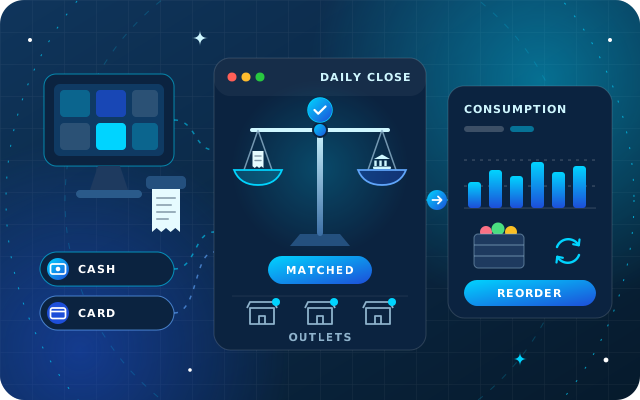
After each outlet closes, StarBiz imports its point-of-sale data through the adapter: sales by menu item and takings by payment method. Validation rules reject incomplete or duplicate imports before they reach the ledger. Takings post automatically, with VAT, to the outlet's cost center, and the manager records the cash counted and deposited.
Finance now reconciles each outlet daily. Card settlements on the imported bank statement are matched with reconciliation suggestions, cash deposits are matched to the takings they belong to, and any difference is flagged for review while the shift is still fresh in everyone's mind. Anomaly detection also highlights unusual discounts and stock adjustments for a manager to check.
Recipes That Connect Sales to Stock
Every menu item is linked to a recipe set up as a bill of materials, with multi-level recipes for sauces, doughs and other prepared components. Ingredients are bought by the case, sack or tray and used by weight or volume, and StarBiz converts between the units automatically. Each day's sales therefore translate into the ingredients the outlet should have used.
Outlet teams run regular cycle counts with barcode scanners, so expected usage can be compared with actual usage. Gaps point managers towards waste, portioning or recording errors, ingredient by ingredient, instead of a single unexplained food cost figure at month-end.
Purchasing Driven by Consumption
Reorder rules with minimum and maximum levels are set per outlet, and AI reorder suggestions propose quantities and suppliers from consumption and lead times. Demand forecasts trained on sales history take account of seasonal shifts such as Ramadan and the summer months, so buyers see busy and quiet periods coming. Chefs raise purchase requests from those suggestions, and the purchasing team consolidates them into requests for quotation, compares suppliers and sends purchase orders that follow value-based approvals. Deliveries are received with barcode scanning, and vendor bills are checked against the order and the receipt through three-way matching.
Every suggestion stays a suggestion: a chef or buyer accepts, adjusts or ignores it, as our guide to what an AI-driven ERP does for a growing UAE business explains.
Outlet-by-Outlet Reporting
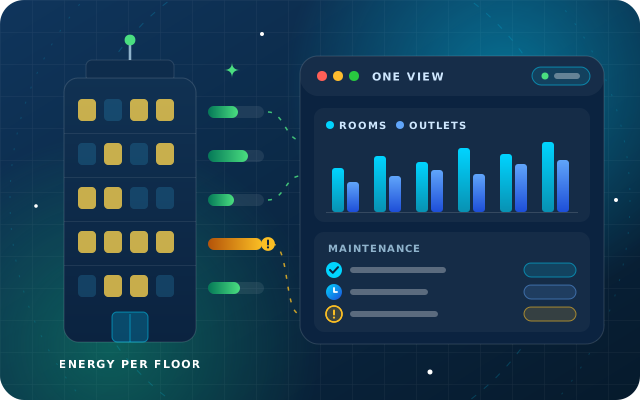
Each outlet is a cost center, and record rules limit outlet managers to their own outlet while head office sees them all. Live dashboards show takings, food cost, purchases and stock variances side by side, with budget against actual for each outlet and PDF or XLSX export for the monthly management pack.