The Challenge
The community combines apartment buildings, villas and shared facilities such as pools, gyms, landscaped areas and car parks. Each building had utility meters, many homes had their own water meters and the central plant ran on a building management system, but nobody could see consumption across the community. Nothing watched the places where problems start: risers, pump rooms, plant rooms, basements and the pipes behind ceilings.
Leaks were found when water came through a ceiling or a resident reported a damp wall, by which time the damage often reached more than one home. Waste in common areas, such as irrigation running in the heat of the day or cooling and lighting left on in empty facilities, showed up only on the next utility bill. Air quality in car parks and enclosed areas was checked during inspections rather than monitored.
When something went wrong, telling residents was slow and inconsistent. Notices were posted in lobbies, forwarded to building chat groups by whoever had the numbers or emailed to out-of-date lists. Residents then called the community office to ask what was happening, and the office answered the same question again and again at the moment it most needed to deal with the problem.
- Leaks discovered through damage rather than data
- Common-area waste visible only on the utility bill
- Resident notices scattered across lobbies, chat groups and email lists
- A community office flooded with calls during every incident
Our Approach
The survey began with water, because that is where a fault does the most damage. Across a sample of buildings and villas we listed the meters and plant controls, marked the points where a leak would reach homes first and checked connectivity. Existing meters and building management systems were read through StarSense gateways over Modbus and MQTT, and new wireless sensors were added only where there was a gap: leak sensors under tanks, at riser valves and in plant rooms, air-quality sensors in car parks and enclosed facilities, and sub-meters on common-area circuits and irrigation. LoRaWAN reached the irrigation zones, villa streets and basements that other links could not.
Alert design came next, with the facilities team and community office agreeing for every condition who acts, who is told and what residents should hear, in that order. A leak in a plant room goes to the duty technician first, and a shutdown that affects homes is announced to the residents of those homes once the technician has confirmed it. The fit-gap review against StarBot covered the resident side: WhatsApp business messaging with approved templates, opt-in flows, a knowledge base for the questions residents ask during an incident and handover to the community office. All of it was configuration, following the pattern we use across Smart Cities and IoT projects.
- Pilot: the first buildings went live with alerts reaching only the facilities team while baselines settled.
- Resident opt-in: residents were invited to opt in, in Arabic or English, with a plain explanation of what they would receive.
- Testing: every alert path was tested end to end, including a simulated leak, a test shutdown notice and a deliberately interrupted gateway link.
- Scale-out: the remaining buildings and villas followed, with each building's residents invited as its sensors went live.
- Training: technicians on acknowledgment and device health, and the community office on templates and the team inbox.
The Solution
Energy, Water and Air Quality on One Dashboard
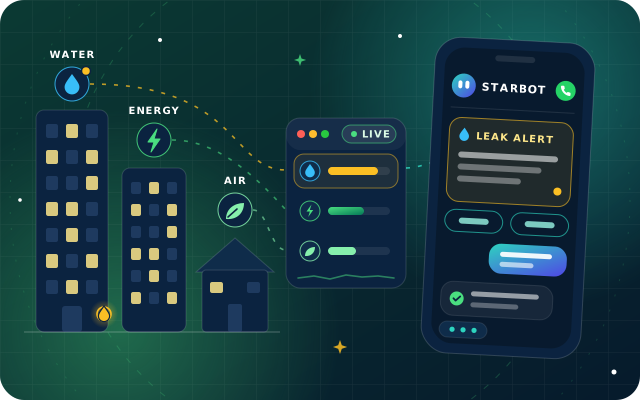
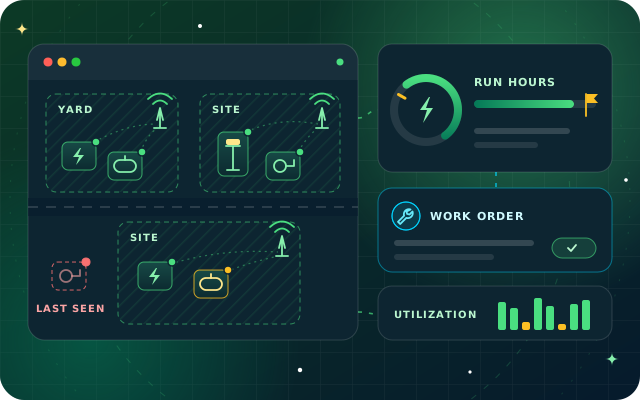
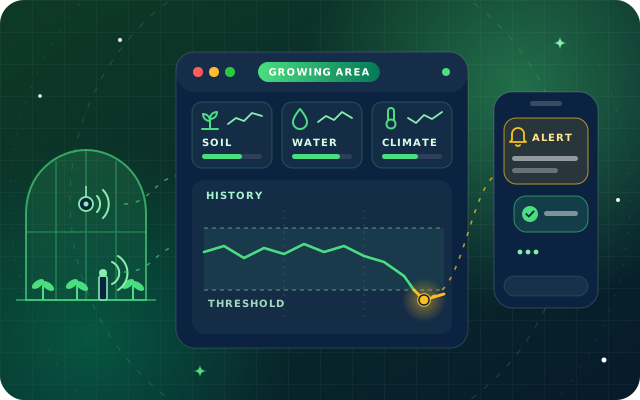
Every meter and sensor sits in the StarSense device registry with its building, location, type and owner. Sub-metering per building, common-area circuit and irrigation zone shows where energy and water go, and baseline models that account for occupancy and weather separate genuine waste from normal use. Air-quality and temperature readings from car parks and enclosed facilities are monitored continuously with a time-stamped history. Dashboards roll everything up by building and facility, with drill-down to raw readings, and a missing-data condition raises an alert when a sensor goes quiet.
Leak and Consumption Alerts
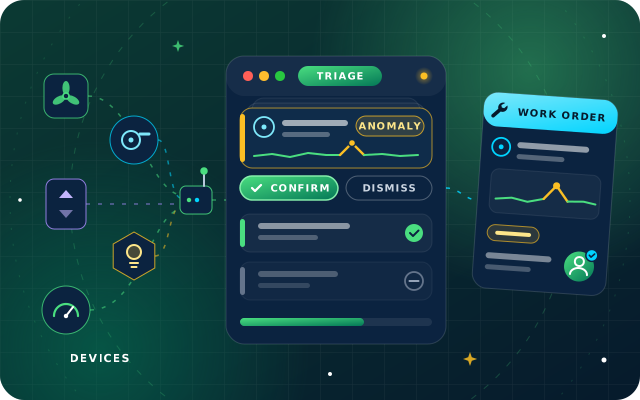
Leak sensors raise an alert as soon as they detect water, and flow readings are scored against each meter's own history, so steady flow through the night or a common-area meter that never stops points to a leak before damage appears. Consumption that drifts from its expected profile, such as irrigation outside its schedule or cooling in a closed facility, raises an anomaly alert. The duty technician receives each alert in-app and on WhatsApp through StarBot, with severity levels and deduplication, and acknowledges it with a reply. If nobody responds, the alert escalates to a second contact. Where valves have actuators, the technician can close a supply remotely, and every command is recorded in the audit log.
Resident Notifications through StarBot
Once the facilities team confirms an incident that affects homes, the community office sends the notice through StarBot as an approved WhatsApp template, in Arabic or English, to the opted-in residents of the affected building. Planned work, such as a water shutdown or a lift service, is announced the same way in advance. When a home's own meter shows continuous flow, that household receives a private alert with simple checks and can ask for a technician in the same chat, which hands the conversation to the community office with the transcript attached. Follow-up questions are answered from the knowledge base the office maintains, and anything StarBot cannot answer goes to the team inbox.
Governance and Reporting
Retention controls set how long transcripts and contact details are kept, and role-based access limits who can read resident conversations and who can control devices. Scheduled reports in PDF and XLSX give management and owners a regular view of consumption by building and common area, alerts raised and how they were handled, and support sustainability reporting.